What a unit price is
The unit price is the cost of one standard unit of a product: per kilogram, per litre, per 100 g, per ounce or per item. Packs come in awkward sizes (450 g, 1.2 kg, 750 ml, 16 oz), so the shelf price alone rarely tells you which is cheaper. Dividing price by quantity puts everything on the same scale:
unit price = price ÷ quantity (in a common unit)
The calculator converts every size to the same base unit first (grams to kilograms, millilitres to litres, ounces to pounds) so you can compare a 500 g bag with a 1.2 kg bag, or a pack sold in ounces with one sold in pounds. Weight and volume cannot be compared with each other, and neither can be compared with a count of items, so choose the same kind of unit for every product.
Worked examples
| Products | Unit prices | Better buy |
|---|---|---|
| Rice: 500 g for 3.49 vs 1.2 kg for 7.99 (the default values) | 6.98 per kg vs 6.66 per kg | 1.2 kg bag, 4.6% cheaper |
| Juice: 750 ml for 2.29 vs 2 litres for 5.49 | 3.05 per litre vs 2.75 per litre | 2 litre carton, 10.1% cheaper |
| Coffee: 16 oz for 4.99 vs 32 oz for 8.49 | 4.99 per lb vs 4.25 per lb | 32 oz bag |
| Toilet paper: 12 rolls for 4.99 vs 36 rolls for 12.99 | 0.42 vs 0.36 per roll | 36-roll pack (if rolls are the same length) |
The percentage saving is measured against the most expensive option: (highest unit price − lowest unit price) ÷ highest unit price. Any currency works, as long as you use the same one for every product.
Bigger is not always cheaper
Bulk packs usually have a lower unit price, but not always. Supermarkets often put promotions on smaller packs, and "family size" products sometimes cost more per kilogram than two regular packs. Multi-buy offers ("3 for 2") change the maths too: work out the total price and total quantity of the deal and enter that as one product. For example, three 400 g tins at 1.20 each on a 3-for-2 offer cost 2.40 for 1.2 kg, or 2.00 per kg, compared with 3.00 per kg at the normal price.
When the cheapest unit price is not the best buy
- Waste: a big bag of salad or bread that goes off before you finish it costs more per portion actually eaten.
- Storage and cash flow: buying a year of washing powder saves money only if you have space and do not need the money for something else.
- Different quality or concentration: concentrated detergent, thicker toilet paper or coffee with a different strength is not directly comparable by weight or count. Compare per wash, per sheet or per cup when the label gives it.
- Drained weight: for tinned fruit, vegetables and fish, compare the drained weight rather than the total, because the liquid is mostly water or brine.
Shelf labels and the law
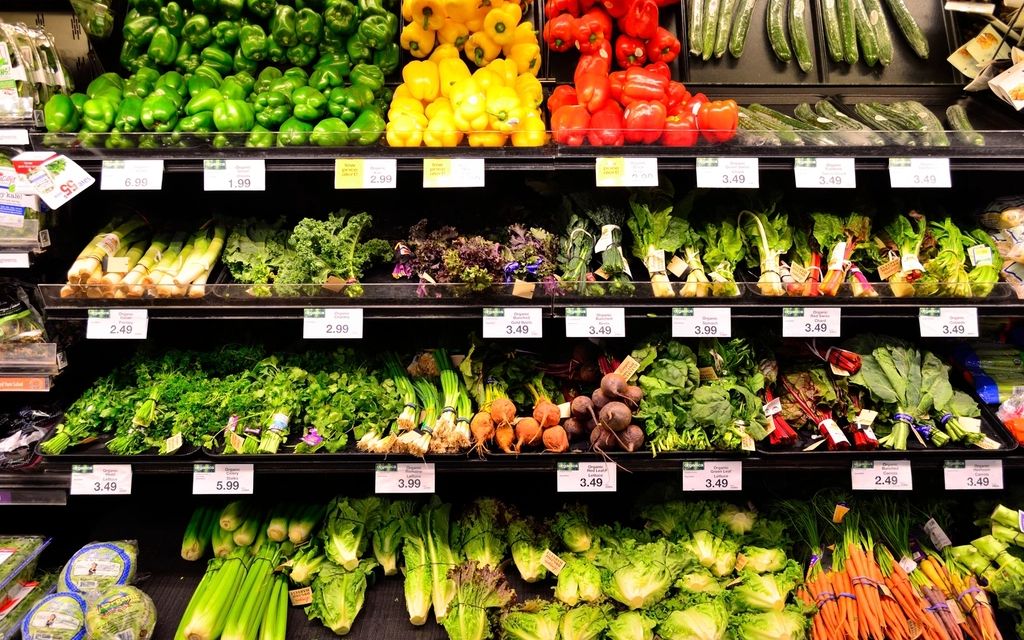
Many countries require supermarkets to show the unit price on shelf labels. In the European Union the Price Indication Directive (98/6/EC) requires the price per kilogram or per litre for most pre-packed goods, and the UK and Australia have similar rules. In the United States, unit pricing depends on state law and voluntary practice, so the units on labels can differ even within one shop, for example price per ounce on one product and per pound or per count on the next. This calculator converts between them for you.
Tips
- Check the unit printed on the shelf label: some show per 100 g, others per kg, which can make cheaper items look more expensive at a glance.
- Factor in discounts with the discount calculator before comparing, and add tax with the sales tax calculator where prices are shown before tax.
- To convert sizes yourself, see kg to lbs.
Frequently asked questions
How do I calculate unit price?
Divide the price by the quantity in a common unit. 7.99 for 1.2 kg is 7.99 ÷ 1.2 = 6.66 per kg.
Is the bigger pack always cheaper?
Usually but not always. Promotions on smaller packs and multi-buy offers can make them cheaper per kilogram, so compare the unit prices.
Can I compare grams with millilitres?
Only for water-like liquids where 1 ml weighs about 1 g. In general, compare weight with weight and volume with volume.
How do I compare a price per ounce with a price per pound?
Multiply the price per ounce by 16 to get the price per pound, or let the calculator convert both packs automatically.
Sources
- Directive 98/6/EC of the European Parliament and of the Council on consumer protection in the indication of the prices of products offered to consumers.
- National Institute of Standards and Technology (NIST). Handbook 130: Uniform Laws and Regulations — Uniform Unit Pricing Regulation.
Last reviewed 14 October 2026. Results are estimates; see our disclaimer.