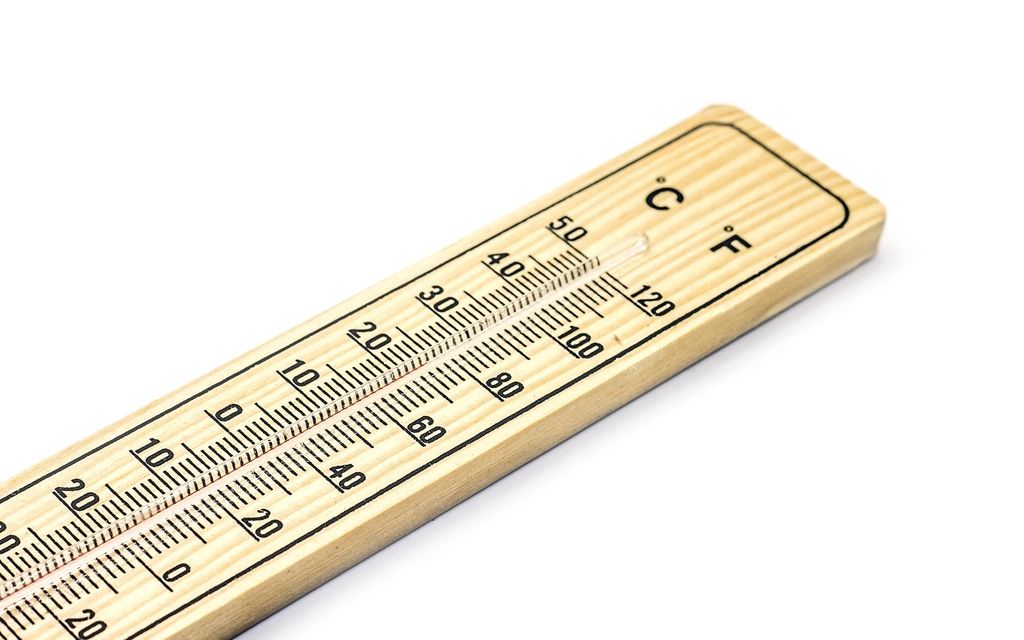
How to convert kelvins to degrees Celsius
Temperature scales have different zero points, so the conversion multiplies and then adds an offset:
°C = K × 1 − 273.15
K = (°C + 273.15) ÷ 1
Example: 0 K → 0 × 1 − 273.15 = -273.15 °C.
To convert the other way, use the degrees Celsius to kelvins converter.
Everyday values
| Kelvins | Degrees Celsius | For example |
|---|---|---|
| 0 K | -273.15 °C | absolute zero |
| 77 K | -196.15 °C | liquid nitrogen boils |
| 273.15 K | 0 °C | water freezes |
| 293.15 K | 20 °C | room temperature |
| 373.15 K | 100 °C | water boils |
| 5,800 K | 5,526.85 °C | the Sun's surface, roughly |
When you need this conversion
Kelvin is used in science, lighting (colour temperature of bulbs, such as 2,700 K warm white) and astronomy. Subtract 273.15 to get Celsius. Note that colour temperature describes the colour of light, not how hot the bulb is.
Kelvin to degree Celsius conversion table
| K | °C | K | °C |
|---|---|---|---|
| 200 K | -73.15 °C | 400 K | 126.85 °C |
| 220 K | -53.15 °C | 420 K | 146.85 °C |
| 240 K | -33.15 °C | 440 K | 166.85 °C |
| 260 K | -13.15 °C | 460 K | 186.85 °C |
| 280 K | 6.85 °C | 480 K | 206.85 °C |
| 300 K | 26.85 °C | 500 K | 226.85 °C |
| 320 K | 46.85 °C | 520 K | 246.85 °C |
| 340 K | 66.85 °C | 540 K | 266.85 °C |
| 360 K | 86.85 °C | 560 K | 286.85 °C |
| 380 K | 106.85 °C | 580 K | 306.85 °C |
About the units
- Kelvin (K): the SI base unit of temperature, starting at absolute zero.
- Degree Celsius (°C): the kelvin scale shifted by 273.15.
Both are units of temperature. The conversion factor comes from the exact definitions above.
Frequently asked questions
What is the formula for kelvins to degrees Celsius?
°C = K × 1 − 273.15. For example, 0 K is -273.15 °C.
How do I convert kelvins to degrees Celsius?
Use °C = K × 1 − 273.15.
What is 0 K in degrees Celsius?
0 K = -273.15 °C.
What is 77 K in degrees Celsius?
77 K = -196.15 °C.
Sources
- NIST Special Publication 811 (2008), Guide for the Use of the International System of Units (SI), Appendix B: conversion factors.
- NIST Handbook 44 (2024), Appendix C: General tables of units of measurement.
Last reviewed 5 October 2026. Results are estimates; see our disclaimer.