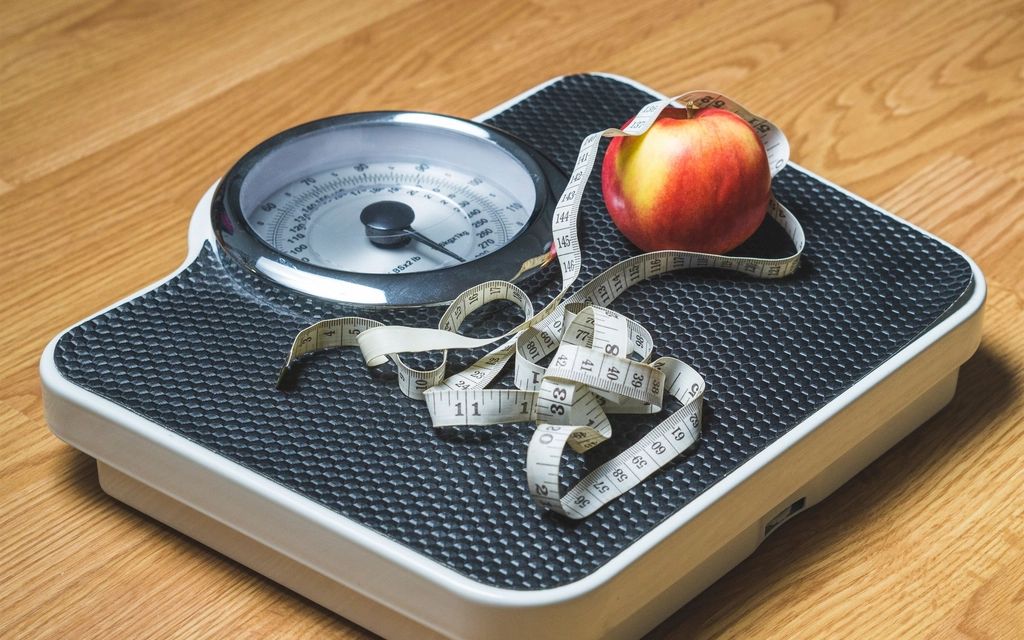
What "ideal weight" means
There is no single perfect weight for a given height. The formulas on this page were created to estimate a reference weight, mainly so that doctors could calculate medicine doses. They are still widely used because they are simple, but they ignore body frame, muscle mass and age. For a health-focused range, the BMI range of 18.5 to 24.9 is usually more useful, and the calculator shows both.
The four classic formulas
Each formula starts from a base weight at 5 feet (152.4 cm) and adds a fixed amount for every inch above that height.
| Formula | Men | Women |
|---|---|---|
| Devine (1974) | 50 kg + 2.3 kg per inch over 5 ft | 45.5 kg + 2.3 kg per inch |
| Robinson (1983) | 52 kg + 1.9 kg per inch | 49 kg + 1.7 kg per inch |
| Miller (1983) | 56.2 kg + 1.41 kg per inch | 53.1 kg + 1.36 kg per inch |
| Hamwi (1964) | 48 kg + 2.7 kg per inch | 45.5 kg + 2.2 kg per inch |
Inches over 5 ft = (height in cm ÷ 2.54) − 60
Ideal weight = base + increment × inches over 5 ft
The Devine formula is the one most often used in medicine, for example to dose certain drugs and to set ventilator volumes. The others were later attempts to fit population data better.
Worked examples
A man 175 cm tall
175 ÷ 2.54 = 68.9 inches, which is 8.9 inches over 5 feet.
- Devine: 50 + 2.3 × 8.9 = 70.5 kg
- Robinson: 52 + 1.9 × 8.9 = 68.9 kg
- Miller: 56.2 + 1.41 × 8.9 = 68.7 kg
- Hamwi: 48 + 2.7 × 8.9 = 72.0 kg
The healthy BMI range for 175 cm is 56.7 to 76.3 kg, and all four formulas fall inside it.
A woman 165 cm tall
165 cm is 4.96 inches over 5 feet. The formulas give 56.9 kg (Devine), 57.4 kg (Robinson), 59.8 kg (Miller) and 56.4 kg (Hamwi). The healthy BMI range is 50.4 to 67.8 kg.
Why the formulas disagree
They were built from different data and for different purposes, so they spread apart, especially for very short or very tall people. Below 5 feet, the formulas are not designed to be used at all (some people subtract the increment for each inch below, but this is not validated). That is one more reason to treat the result as a rough reference, not a target you must reach.
A better question: what is a healthy range for me?
- BMI range: 18.5–24.9 for most adults, with extra caution from 23 for people of Asian background.
- Waist size: below about 94 cm (men) and 80 cm (women) in WHO reference values. See the BMI calculator.
- Your history: the weight at which you felt well, slept well and had normal blood pressure and blood sugar is often a sensible personal reference.
If you want to move towards a different weight, small and steady changes are easier to maintain. The calorie calculator estimates how much energy you need.
Common mistakes
- Chasing an exact number. A range of several kilograms is healthy for every height.
- Ignoring muscle. Strength athletes often weigh more than any formula suggests while having little body fat.
- Using the formulas for children. They are only for adults.
Results are estimates for adults. For personal advice about weight, talk to a doctor or registered dietitian.
Ideal weight for common heights
| Height | Devine (men) | Devine (women) | Healthy BMI range |
|---|---|---|---|
| 155 cm (5 ft 1 in) | 52.4 kg | 47.9 kg | 44.4 – 59.8 kg |
| 160 cm (5 ft 3 in) | 56.9 kg | 52.4 kg | 47.4 – 63.7 kg |
| 170 cm (5 ft 7 in) | 65.9 kg | 61.4 kg | 53.5 – 72.0 kg |
| 180 cm (5 ft 11 in) | 75.0 kg | 70.5 kg | 59.9 – 80.7 kg |
| 190 cm (6 ft 3 in) | 84.0 kg | 79.5 kg | 66.8 – 89.9 kg |
The healthy range is several kilograms wide at every height, which is a reminder that a single "ideal" number is only a reference point.
Body composition matters more than the scale
Two people of the same height and weight can have very different amounts of muscle and fat. Waist size, strength, fitness and blood tests say more about health than how close you are to a formula. If you exercise regularly and your waist is in the healthy range, being a few kilograms above a formula value is rarely a concern.
Frequently asked questions
What is the ideal weight for my height?
There is no single ideal weight. Formulas like Devine give a reference point, and a BMI between 18.5 and 24.9 gives a healthy range of several kilograms for every height.
Which ideal weight formula is most accurate?
None is accurate for an individual. The Devine formula is the most widely used in medicine, mainly for drug dosing.
Do ideal weight formulas consider muscle or frame size?
No. They only use height and sex, so muscular or large-framed people often weigh more than the formulas suggest while being healthy.
What is the ideal weight for a 5 ft 9 in man?
About 70.7 kg (156 lb) by Devine, 69.1 kg by Robinson, 68.9 kg by Miller and 72.3 kg by Hamwi. The healthy BMI range at that height is about 56.8–76.5 kg.
What is the ideal weight for a 170 cm woman?
About 61.4 kg by the Devine formula; the healthy BMI range at 170 cm is 53.5 to 72.0 kg.
What is the ideal weight for a 180 cm man?
About 75 kg by the Devine formula; the healthy BMI range at 180 cm is 59.9 to 80.7 kg.
Sources
- Devine BJ. Gentamicin therapy. Drug Intelligence & Clinical Pharmacy, 1974; 8: 650–655.
- Robinson JD, Lupkiewicz SM, Palenik L, et al. Determination of ideal body weight for drug dosage calculations. American Journal of Hospital Pharmacy, 1983; 40: 1016–1019.
- Miller DR, Carlson JD, Loyd BJ, Day BJ. Determining ideal body weight. American Journal of Hospital Pharmacy, 1983; 40: 1622.
- Hamwi GJ. Therapy: changing dietary concepts. In: Diabetes Mellitus: Diagnosis and Treatment. American Diabetes Association, 1964.
Last reviewed 5 October 2026. Results are estimates; see our disclaimer.